Mission-Driven Technology Since 2001*
*of many potential founding dates – listen to learn why
Listen to Podcast
Like podcasts? Find our full archive here or anywhere you listen to podcasts: search Community IT Innovators Nonprofit Technology Topics on Apple, Spotify, Google, Stitcher, Pandora, and more. Or ask your smart speaker.
Community IT Grows Out of the Community Services Division
On February 1, 2001, the technology landscape looked very different than it does today. The dot-com bubble was in the midst of a turbulent burst, and many organizations were struggling to find their footing as the internet gold rush cooled. It was within this climate of uncertainty that David Deal saw a necessary path forward.
At the time, David was leading the community service division within a company called Reliacom. As Reliacom began to falter, David recognized that the nonprofits they served needed more than just a vendor; they needed a dedicated partner who understood their unique missions. He took the leap to spin out the division and found Community IT. While Reliacom would eventually cease operations a few years later, David’s decision to build a company on a bedrock of service ensured that the nonprofit community would not be left behind in the digital age. You can learn more about the Community IT history here.
A Foundation of Servant-Leadership
The stability and longevity of Community IT over the last quarter-century can be traced back to its foundational values. David brought with him a Mennonite tradition of servant-leadership. In a field that is often characterized by fast-paced sales and technical jargon, this approach prioritized the long-term needs of the client and the well-being of the staff above all else.
This philosophy remains our guiding star today. It means we don’t just fix computers; we empower organizations to achieve their goals. By stewarding our clients’ technology through ever-changing needs, we have built a culture of trust that has allowed us to navigate twenty-five years of rapid industry change alongside the organizations we support.
Twenty-Five Years of Technological Evolution
While our mission has remained constant, the tools we use to fulfill it have changed dramatically. In this podcast discussion, our CEO Johan Hammerstrom reflected on the distinct eras of Community IT:
- The Modern Era (2020s and beyond): The pandemic shutdowns of 2020 accelerated a shift that was already underway. Today, we provide remote services to nonprofits all over the United States, helping them manage distributed teams and maintain high levels of cybersecurity in an increasingly online world.
- The Cloud Revolution (2010s): As working in the cloud became affordable and practical, we guided our clients through the transition away from on-site servers toward flexible, scalable online services.
- The Shift to Stability: Following the 2007 financial crisis, we recognized the need for a more sustainable and predictable model for our clients. We moved away from custom database and website development to focus on the Managed Service Provider (MSP) model. This allowed nonprofits to have proactive, holistic IT support with a fixed, manageable budget.
- The Early Days (2000s): In our first decade, managing IT was a hands-on endeavor. Our engineers spent their days wiring offices for internet access and making on-site visits to troubleshoot hardware. We were there in the server rooms, ensuring the physical infrastructure could support the growing needs of a digital office.
Our Greatest Asset: The Community IT Team
When asked about the future of IT, Johan is candid: it is nearly impossible to predict exactly where technology will be five years from now, let alone twenty-five. However, the secret to our longevity isn’t our ability to predict the next gadget; it is our commitment to our people.
The vibrancy of Community IT is found in our staff—past, present, and future. We couldn’t celebrate 25 years of Community IT without them. We pride ourselves on hiring creative, dedicated technology experts who are also communicators. Technology will always change, but the need for a trusted advisor who can translate that technology-speak into manageable priorities and guide mission-driven results will always be constant at nonprofits. Our staff are the ones who bridge the gap between complex technical requirements and the practical needs of nonprofit executives. To learn more about our amazing people, check out Community IT Voices.
Looking Toward the Future
As we celebrate this 25th anniversary, we want to extend our deepest gratitude to the nonprofit leaders and staff who have trusted us with their technology. Your missions inspire us to stay curious, stay diligent, and stay committed to the servant-leadership model that David Deal established in 2001.
Whether the future brings new advancements in artificial intelligence, evolving security challenges, or tools we haven’t yet imagined, Community IT will be here to ensure you have the expertise you need to navigate them.
Celebrate 25 Years of Community IT With Us
We invite you to join the celebration all year long. You can begin by listening to the full anniversary podcast episode with Johan Hammerstrom, where we dive deeper into these stories and the lessons we’ve learned over two and a half decades of service.
Presenters
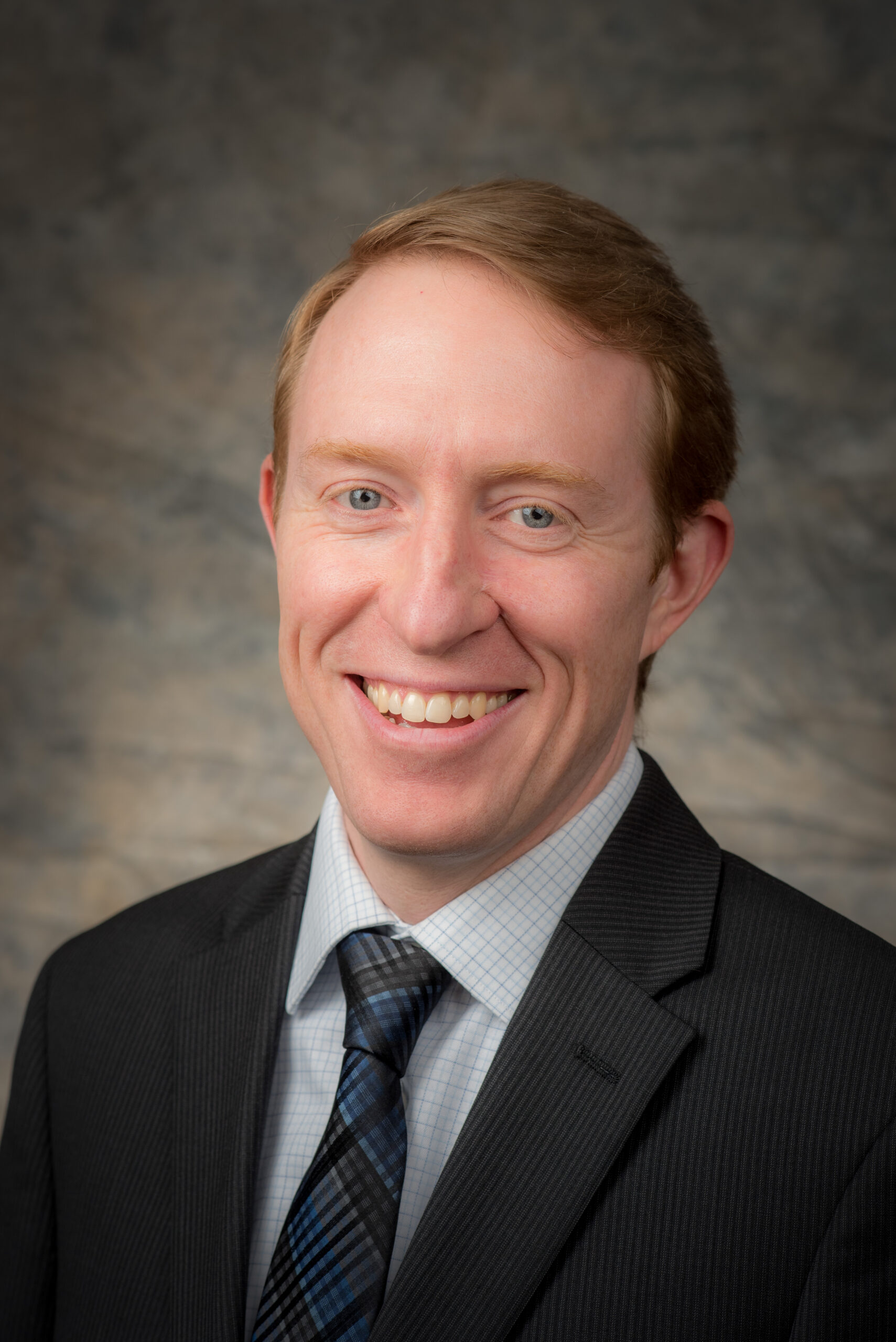
Johan Hammerstrom’s focus and expertise are in nonprofit IT leadership, governance practices, and nonprofit IT strategy. In addition to deep experience supporting hundreds of nonprofit clients for over 20 years, Johan has a technical background as a computer engineer and a strong servant-leadership style as the head of an employee-owned small service business. After advising and strategizing with nonprofit clients over the years, he has gained a wealth of insight into the budget and decision-making culture at nonprofits – a culture that enables creative IT management but can place constraints on strategies and implementation.
As CEO, Johan provides high-level direction and leadership in client partnerships. He also guides Community IT’s relationship to its Board and ESOP employee-owners. Johan is also instrumental in building a Community IT value of giving back to the sector by sharing resources and knowledge through free website materials, monthly webinars, and external speaking engagements. He has assisted hundreds of nonprofits over his decades of experience at Community IT and has been instrumental in assuring that all clients have access to strategic planning – a service that is uncommon at outsourced IT providers but that Community IT feels is an essence of what we can provide to nonprofit clients to help them be successful at their missions. Johan was happy to talk about celebrating the 25 years of Community IT with Carolyn and to reminisce about the early days and how much our company has grown and changed while our mission remains the same: excellent IT service to nonprofits.
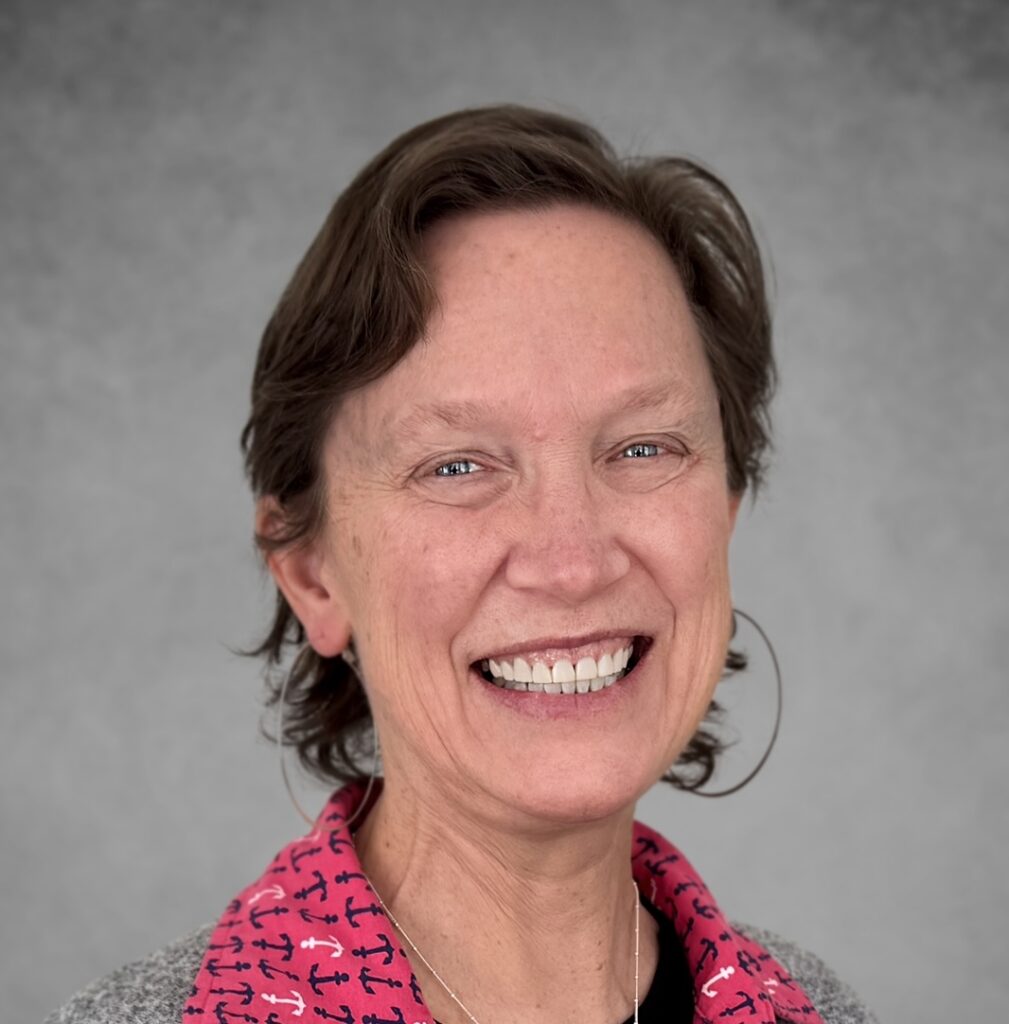
Carolyn Woodard is currently head of Marketing and Outreach at Community IT Innovators. She has served many roles at Community IT, from client to project manager to marketing. With over twenty years of experience in the nonprofit world, including as a nonprofit technology project manager and Director of IT at both large and small organizations, Carolyn knows the frustrations and delights of working with technology professionals, accidental techies, executives, and staff to deliver your organization’s mission and keep your IT infrastructure operating. She has a master’s degree in Nonprofit Management from Johns Hopkins University and received her undergraduate degree in English Literature from Williams College.
She was happy to have this podcast conversation with Johan to celebrate 25 years of Community IT and can’t wait to see where we go next.
Ready to get strategic about your IT?
Community IT has been serving nonprofits exclusively for twenty-five years. In fact, we celebrate 25 years of Community IT this month and all year. We offer Managed IT support services for nonprofits that want to outsource all or part of their IT support and hosted services. For a fixed monthly fee, we provide unlimited remote and on-site help desk support, proactive network management, and ongoing IT planning from a dedicated team of experts in nonprofit-focused IT. And our clients benefit from our IT Business Managers team who will work with you to plan your IT investments and technology roadmap if you don’t have an in-house IT Director.
Being 100% employee-owned is important to us and our clients. It is an important aspect of our culture as a business serving nonprofits exclusively for 25 years. Your Nonprofit IT Budgeting strategy is important to Community IT. Unlike most MSPs, Community IT considers budgeting and strategic management a major part of our services to our clients.
We constantly research and evaluate new technology to ensure that you get cutting-edge solutions that are tailored to your organization, using standard industry tech tools that don’t lock you into a single vendor or consultant. And we don’t treat any aspect of nonprofit IT as if it is too complicated for you to understand.
We think your IT vendor should be able to explain everything without jargon or lingo. If you can’t understand your IT management strategy to your own satisfaction, keep asking your questions until you find an outsourced IT provider who will partner with you for well-managed IT.
More on our Managed Services here. More resources on Cybersecurity here.
If you’re ready to gain peace of mind about your IT support, let’s talk.
Transcript: Celebrating 25 Years of Community IT Innovators
Carolyn Woodard: Welcome everyone to the Community IT Innovators Technology Topics podcast. I’m Carolyn Woodard, your host. Today, I’m very excited to talk with our CEO, Johan Hammerstrom, about a very special occasion. Johan, would you like to introduce yourself?
Johan Hammerstrom: Thanks, Carolyn. Happy to be back on the podcast. I’m Johan Hammerstrom, the CEO of Community IT. Today, we’re talking about the history of the company and specifically our 25th anniversary. February 1st marks the founding of Community IT Innovators, and we are very excited to be celebrating 25 years this year.
Carolyn Woodard: Thank you for doing this with me. I thought we would go backward in time to look at some highlights. For me, 2020 comes to mind—going all-remote and doubling the size of our staff and client base. Then there was 2012, when we became 100% employee-owned. Around 2008 and 2010, we focused on our core services and decided to pare off other offerings to be the best MSP (Managed Service Provider) we could be.
Johan Hammerstrom: It’s definitely worth recognizing that for the first 10 years, those teams did amazing work. It was another era; they were building databases and websites from scratch.
Carolyn Woodard: And that stopped being the way we do things. It demonstrates how we evolve. That’s a good quality to have in a long-term partner—someone who isn’t stuck in past technologies.
The Founding and the ESOP Journey
Carolyn Woodard: The ESOP (Employee Stock Ownership Plan) was founded in 2005. Is that when the process started to move shares to employees?
Johan Hammerstrom: Yes. 2005 is when the company converted from an LLC into a corporation. When we incorporated, our founder, Dave Deal, was the majority shareholder, but the ESOP Trust was created with about five or ten percent of the shares.
Another thing that comes back to me from that era is the Great Recession, which had a big impact on the company.
Carolyn Woodard: We weathered that financial crisis, and it helped us refine our offerings. But the story actually goes back further to a company called Reliacom.
Johan Hammerstrom: Reliacom was founded in the early ’90s by Chris Chang. Our founder, David Deal, worked for him and was in charge of a practice focused solely on nonprofits. After about eight or nine years, David spun the company out and founded Community IT. He even had to take out a second mortgage on his house—the typical small business founder story.
There was some confusion about our age because Reliacom was founded in 1993, the Community Services Division in 1994, and then Community IT in 2001. People would just pick whichever date was most convenient for the circumstance. I think it’s been long enough now that we can say February 1st, 2001, is the official start date of this company.
Technology Shifts: From Server Closets to the Cloud
Carolyn Woodard: Can you tell me more about the changes in technology over those years?
Johan Hammerstrom: The early business for Reliacom came from the growth of the internet in the mid-90s. Then the dot-com boom happened, followed by the bust in 2000. It was actually that bust that forced our hand to split off from Reliacom. If it hadn’t happened, we probably would have stayed a division because we had no interest in running our own business at the time. We were all in our 20s and felt like “rebels” helping small organizations; we weren’t “corporate robots” trying to make money.
Six months after we became Community IT in 2001, 9/11 happened. That caused major changes in the nonprofit sector, but it was also when the internet really took off. We grew fast between 2002 and 2007, and eventually, the MSP model started to take hold in the industry.
Carolyn Woodard: When I joined, we were still doing custom work, like building SQL databases. We were often the only ones who knew how they worked. Over time, best practices moved toward standardized technology. We followed what we saw in the community rather than just sticking to what we were originally trained to do.
Johan Hammerstrom: Absolutely. There was a book called The Big Switch that used a great analogy. In the late 1800s, every factory had its own coal-fired furnace for power. In the early 1900s, those were replaced by the power grid. The author predicted the same for IT: instead of everyone having a server in their closet, everything would shift to a common, efficient infrastructure—the cloud.
In 2010, everyone had a server in a closet. Databases were often built in Microsoft Access by an intern who would eventually leave, leaving the organization with critical data they couldn’t maintain. Our solution evolved from building custom ColdFusion databases to moving clients toward commercially available platforms like Salesforce. The same happened with websites moving toward WordPress or Squarespace. We’ve always embraced the more efficient, reliable approach.
Carolyn Woodard: I remember some MSPs were resistant to the cloud because they thought they would lose business.
Johan Hammerstrom: Our premise has always been to do what is best for the nonprofit sector. If there is no longer a need for us, we should shut down because we aren’t delivering value. I remember a company called Zenith InfoTech that sold a “Zenith Cloud,” which was just a bunch of servers in a closet. We knew that wasn’t the cloud. They eventually went out of business.
The People and Culture of Community IT
Carolyn Woodard: It’s hard for nonprofits to find IT personnel who have technical skills, understand nonprofits, and are “people persons.” How has Community IT found its people over the last 25 years?
Johan Hammerstrom: The common factor among our longest-tenured employees is a commitment to nonprofit organizations. Technically talented people are hard to find, but finding those who are also committed to this sector is the real challenge.
One benefit we provide is a community. Often, a nonprofit’s internal IT person is alone. At Community IT, you have a huge community of peers to turn to for technical and non-technical guidance. I’ve had the honor to work with incredible in-house IT professionals at the organizations we support. These are people who could be making much more money elsewhere, but they recognize there are more important things than maximizing earning potential.
Carolyn Woodard: Our culture has really snowballed. We attract people who love the mission. I also want to mention organizations like NTEN and TAG (Technology Association of Grantmakers) that help connect technology nerds in this sector.
Johan Hammerstrom: I also want to shout out our staff who are immigrants to the United States. About 10 years ago, we started partnering with the Carlos Rosario Public Charter School in D.C. to provide job placement for their IT graduates. Hiring first-generation immigrant staff transformed our culture to make it more welcoming.
Lastly, I have to acknowledge our Mennonite history. Our founder, David Deal, is a Mennonite, and many early staff members were part of the Mennonite Voluntary Service. That culture of service, humility, and resourcefulness is still a part of our values today. I’m not a Mennonite myself, but I have benefited greatly from that foundation.
Looking Toward the Future
Carolyn Woodard: 25 years is a huge achievement for a small business. Where do you see us going in the next five to ten years?
Johan Hammerstrom: Our purpose is our bedrock: to help nonprofits accomplish their missions through the effective use of technology. We have changed dramatically in the last five years, moving from a D.C.-based business to a fully virtual, nationwide company.
Being employee-owned means our direction is a collective vision. We don’t always know exactly what technology is coming—no one predicted the scale of ChatGPT in 2021—but staying grounded in our purpose helps us stay agile. The future of the company is the creativity that every employee brings to the work.
Carolyn Woodard: That is a perfect place to leave it. Thank you, Johan, for joining me to celebrate our 25th anniversary. I am proud to work for a company like this.
Johan Hammerstrom: Thank you, Carolyn. I want to thank all the employees—past and present—who have worked here. This anniversary is a result of your work, too.
As advocates for using technology transparently to work smarter, we’re practicing what we recommend. This transcript was edited lightly with the assistance of AI for clarity, and is not a verbatim transcript. The content was reviewed, edited, and finalized by a human editor to ensure accuracy and relevance.
Photo by Brooke Lark on Unsplash