“AI doesn’t do social services… we can make intake more efficient; your organization has to be able to do the work”
Listen to Podcast
Like podcasts? Find our full archive here or anywhere you listen to podcasts: search Community IT Innovators Nonprofit Technology Topics on Apple, Spotify, Google, Stitcher, Pandora, and more. Or ask your smart speaker.
Nonprofit Voice AI Intake Technology with Chip Kennedy
Carolyn Woodard explores voice AI in the social services sector with Chip Kennedy, founder and CEO of CivicReach, a technology company building AI-powered communication tools for nonprofits and government agencies delivering human services. Chip brings a rare dual perspective: years as a technologist and startup founder alongside his role and experience running a nonprofit serving families experiencing homelessness.
When people we serve need information, how can we get it to them? When our nonprofits free up employee time by using technology – in this case Voice AI to answer simple questions in incoming calls – what else can those staff members do with that time? Can emerging technology help staff up government agencies and nonprofits who are chronically understaffed and under resourced, without losing the trust of the communities they care about?
The conversation digs into how voice AI is helping under-resourced social services organizations close the gap between people asking for help and the staff trying to reach them. Chip is candid that voice AI is not the right fit for every organization, and he shares how to evaluate whether it is right for yours.
He also makes a compelling case that AI-driven phone intake is not a job displacement risk in human services – a sector so chronically understaffed that organizations are more likely to redeploy freed-up staff capacity than lose positions.
Carolyn and Chip discuss:
- Why human services is one sector where job displacement fears around AI largely don’t apply – and what freed-up staff capacity actually looks like in practice.
- How to evaluate whether voice AI is a good fit for your organization before committing to a vendor. What are the questions to ask about their business model, their data policy, and their understanding of your nonprofit mission.
- The value of running a structured technology pilot, why more nonprofits should be asking vendors for one, and how to ask.
- How to build internal champions and skeptics into your pilot team so you get honest feedback at the end.
- Three questions every nonprofit should ask any AI vendor: where does your data go, how will our organization have to change, and how do you plan to stay sustainable?
Resources Mentioned:
- CivicReach – https://civicreach.ai
Presenters
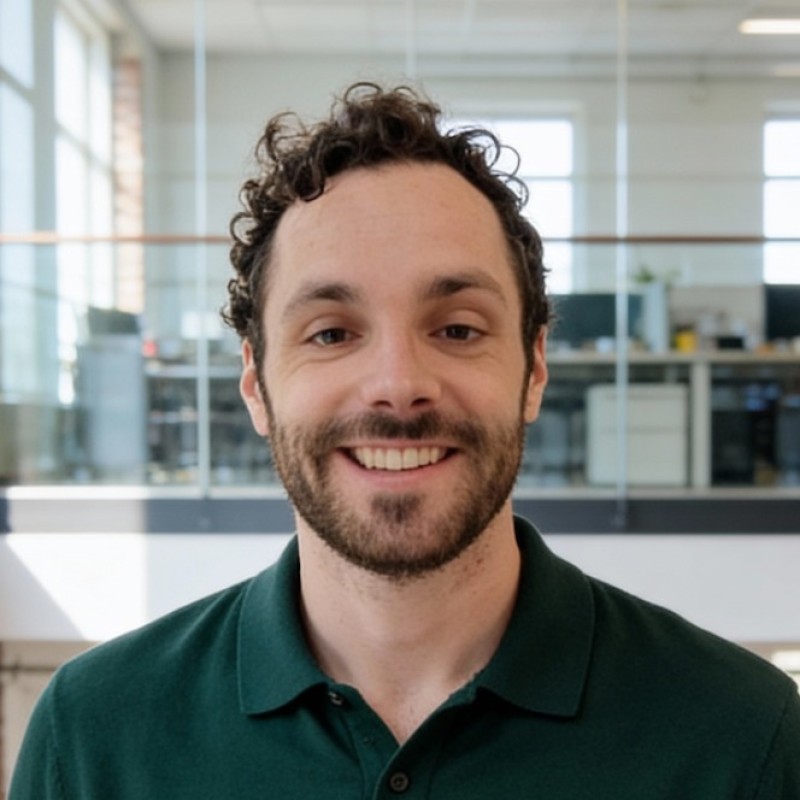
Chip Kennedy is the founder and CEO of CivicReach, a Raleigh-based technology company building AI-powered communication tools to help nonprofits and government agencies better serve people in need. CivicReach’s voice AI platform helps social service agencies handle intake, answer calls, and connect residents with the information and benefits they need, with the goal of closing the gap between the people delivering help and the people asking for it. Chip brings a decade-plus of experience as a software engineer, product builder, and entrepreneur across healthcare, civic tech, and mission-driven startups, including roles as VP of Product and Engineering at Guaranteed Health and CTO of Tastemakers Africa.
Alongside his work as a technologist, Chip has spent much of his adult life as a nonprofit director, helping run Christmas in the City, the Boston-based organization his parents founded that throws an annual holiday party for families living in homeless shelters across Greater Boston. That dual vantage point, knowing firsthand both the power of technology and the realities of nonprofit service delivery, is what drove him to found CivicReach. He also co-organizes Triangle Tech Night, a networking community for the Research Triangle tech ecosystem, and is a member of the CivStart accelerator cohort focused on AI in government.
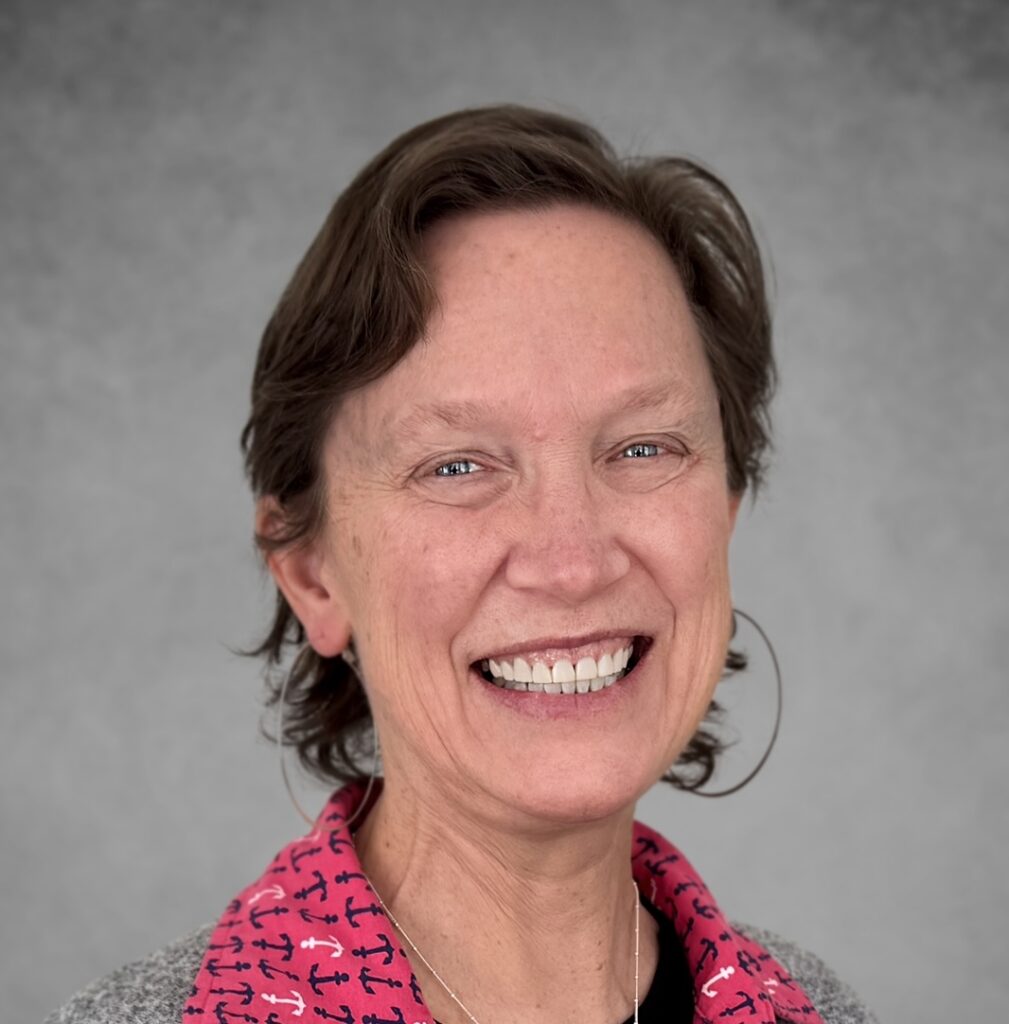
Carolyn Woodard is currently head of Marketing and Outreach at Community IT Innovators. She has served many roles at Community IT, from client to project manager to marketing. With over twenty years of experience in the nonprofit world, including as a nonprofit technology project manager and Director of IT at both large and small organizations, Carolyn knows the frustrations and delights of working with technology professionals, accidental techies, executives, and staff to deliver your organization’s mission and keep your IT infrastructure operating. She has a master’s degree in Nonprofit Management from Johns Hopkins University and received her undergraduate degree in English Literature from Williams College.
She was glad to have this conversation with Chip Kennedy about nonprofit AI voice intake technology and technology and nonprofit issues in general.
Ready to get strategic about your IT?
Community IT has been serving nonprofits exclusively for twenty-five years. We offer Managed IT support services for nonprofits that want to outsource all or part of their IT support and hosted services. For a fixed monthly fee, we provide unlimited remote and on-site help desk support, proactive network management, and ongoing IT planning from a dedicated team of experts in nonprofit-focused IT. Our clients benefit from our IT Business Managers team who will work with you to plan your IT investments and technology roadmap if you don’t have an in-house IT Director.
Being 100% employee-owned is important to us and our clients. It is an important aspect of our culture as a business serving nonprofits exclusively for 25 years.
We constantly research and evaluate new technology to ensure that you get cutting-edge solutions that are tailored to your organization, using standard industry tech tools that don’t lock you into a single vendor or consultant. That’s even more important now in the age of AI. And we don’t treat any aspect of nonprofit IT as if it is too complicated for you to understand.
We think your IT vendor should be able to explain everything without jargon or lingo.
If you can’t understand your IT management strategy to your own satisfaction, keep asking your questions until you find an outsourced IT provider who will partner with you for well-managed IT.
More on our Managed Services here. More resources on Cybersecurity here.
If you’re ready to gain peace of mind about your IT support, let’s talk.
Transcript
Chip Kennedy: Business sustainability is not for-profit or nonprofit. It’s so much more layered than that, and a sign you can serve any sector and do as much good as you want, still build a sustainable business.
Introducing CivicReach and the Communication Gap in Human Services
Carolyn Woodard: Welcome everyone to the Community IT Innovators Technology Topics podcast. I’m Carolyn Woodard, your host, and today I’m really interested to be here talking with Chip Kennedy, who is the founder and CEO of CivicReach. So, Chip, would you like to introduce yourself and tell us about what your company does?
Chip Kennedy: I would love to. Thanks, Carolyn, for having me. I’m really excited to be on the podcast.
My name is Chip. I’m the founder and CEO of CivicReach. We are a technology company that builds better communication tools for nonprofits and governments in human services and social services. What that means specifically is we use tools, things like AI, which can be scary for some folks, and lots of other tools that help close the gap between social workers, caseworkers, and anyone on the front lines of delivering social services in this country to folks who are asking for and receiving help.
We think there’s too much bad technology and too much bureaucracy that often gets in the way of these conversations and delivering benefits and support. And we aim to close that gap.
Carolyn Woodard: The more I learn about your company and your story, it’s so interesting because it does feel like this new frontier to this kind of age-old problem of getting the information to the people who need the information. But I would love to hear more about you and how you came to found this company.
Chip Kennedy: Happy to share. And you said it well yourself: new frontier of an age-old problem. And I think that explains my story well.
I’ve had two lives as I’ve come about my career. One as a technologist, learning the tools of how to build fast-paced startups, how to leverage technology companies for social good. I’ve been an engineer, a chief technology officer. I’ve started companies in the tech for social good space. Lots of both horror stories of startups that have gone well and gone wrong, as well as a lot learned in how to build technology for humans, the things that actually make our lives better.
The other life is part-time throughout my adult life. I’ve had the absolute privilege of running a nonprofit in the homelessness services space with my family. It’s something my parents started. It’s in Boston. It’s called Christmas in the City. And we throw this annual holiday party for families living in homeless shelters across Greater Boston.
It was the brainchild of my parents before I was around, but I sort of inherited a role of helping to keep the organization running. And I had a hand in bringing a version of that party to New York. I now live in North Carolina, so I think we’re finding lots of opportunities down the East Coast. But it’s all to say: while I’m over here building a career as a technologist, the whole time I would spend every December thinking through how do we create a little bit of extra dignity and magic and joy for families who’ve had the hardest year imaginable. And trying to answer that question every year, not with technology, just with elbow grease and heart, was fascinating to me.
So CivicReach as an idea was the first time that I said, well, what’s my biggest problem as a nonprofit director, living in the social services space, helping families in that space? And how can Chip the technologist solve it?
Communication tools, you said age-old problem. That was the problem. We knew exactly how our services worked when someone came in our doors. We didn’t understand how everyone could or should find us. And we sure didn’t understand how to refer folks to other services when they need them. The social safety net is an interesting term because it’s frayed in places and some of the holes are bigger than others. And doing this job for years, and talking to nonprofit directors and anyone who is delivering services, it is not equal everywhere, and it is not easy to navigate.
So that communication layer, that referral layer, how this network comes together, I think it could use some TLC from the innovation side of things.
Evaluating Voice AI for Human Services: Is It Right for Your Organization?
Carolyn Woodard: So if there are people out there who are listening to this who are working in nonprofits serving those people and constituents, can you talk a little bit about evaluating and responsibly deploying AI voice, which is what your company does, and talk just a little bit about how it works?
Chip Kennedy: I’ll give you two answers, and I want this to be accessible for folks.
I’ll first say what I’m not supposed to say: voice AI is not for every organization. With lots of organizations, it’s an amazing tool. If you want a demo, it will really impress you, but it’s not meant for every organization. I talk to nonprofits, I talk to counties and cities, I talk to social workers all the time, some who are really excited, some who aren’t excited, some who are skeptical, and many where I’m the first one to say it’s not a great fit. So the lesson there is yes, I can tell you all about how we built this really interesting product.
But what I really want the takeaway to be for leaders in human services and social services, whether you’re a caseworker, a social worker, a nonprofit director, anyone who’s dedicating part of your career to helping your community: innovation is your friend. And maybe one tool is not for you. Maybe AI is not necessarily what your organization is ready for right now, but changing how you do things and experimenting with what comes next will help you in the long run.
And I want every organization we work with, every organization that listens to CivicReach and the tools we build, including and especially ones that don’t work with us in the long run, to take that lesson away. Keep innovating technology, keep innovating best practices, management practices, because the best that can happen is that you grow and you serve more people.
Carolyn Woodard: Yeah, it totally makes sense. I love that idea. That is very similar to what Community IT says as well, which I think we’re also not supposed to say. But we want every nonprofit to have the IT that works for them. And sometimes it’s us and sometimes it’s a different solution, but we want it to work.
How to Evaluate Voice AI Tools and Vendors
So can you just go back a little bit and tell me more about if you’re in this sector and you’re thinking about a tool like this that will help with your intake, are there some things you should be looking at in the evaluation? It sounds like you’re saying both for the tools you’re considering, but also for yourself, like know thyself as well.
Chip Kennedy: Yeah. So CivicReach has learned a lot growing up and figuring out how we can best solve this age-old communication problem.
Our starting point was intake for each organization that we work with. Any organization that’s on the front lines of helping folks in need: what does their intake process look like? When is someone a good candidate? When does our technology help?
It’s when you know that if you had more capacity for intake and solved that problem to some degree, your organization would serve more people. It’s a simple equation.
So if we talk to folks and we say, okay, you want to serve more families, you want to serve more meals, you want to expand how many beds are serving folks, funding is the number one challenge, always.
Now let’s get scrappy and figure out what the next challenges are. And if we say, well, what would happen if you had two more staff answering phones? If you had a call center set up at the front desk there, what would happen? They’d say, well, we would serve twice as many people. Our caseworkers would be happier, we could triage more, we could restart this whole program of emergency assistance we used to do that we don’t do anymore because we couldn’t handle the phone calls.
When we get those answers, we say, well, let’s talk about innovation for intake, let’s talk about the tools CivicReach has built, because we can now solve that part of the equation, and you will get more capacity because of it.
Carolyn Woodard: So are there technology or technical considerations that organizations have to think through? And I assume you help them think through those.
Chip Kennedy: Of course. And I know Carolyn, your whole team probably does this all the time: let’s learn as much as we can about the technology so we’re not bringing a foreign concept into organizations.
It’s not just giving capacity through technology, it’s creating organizational capacity.
I’d say the biggest implications of our work and the products we build, especially using AI, are the people implications. So if we’re going to work with an organization, it’s because we know that if we can change and shift the equation of how expensive and hard it is to do intake, we can increase their capacity. But increased capacity means increased capacity. It does often mean more cases if you’re caseworkers and social workers. It could mean longer lines.
AI is not a magic bullet. I know listeners have absolutely heard this before. What we say that means for the organizations we serve is: you want to serve more people, and that takes effort. Our technology is not here to do social services. Technology is not here to take care of our neighbors. As a technologist building these tools, I never want that to be the conversation we’re having. Technology at CivicReach is here to support organizations that are helping their neighbors to help more of their community.
So we often have to have hard conversations, not a little bit about AI, but a lot about how might your organization change to meet this new demand. We’re going to make it more effective; you have to make it work.
Skepticism and AI, Job Displacement, and Larger Issues of Trust
Carolyn Woodard: Yeah. Can you talk a little bit more about some of that skepticism? We’re seeing a lot in our clients, a lot of mistrust of AI in general, like the big AI companies for sure, but also in the area that you’re talking about, with interacting with constituents and interacting with the people that you serve and the communities you really care about. I imagine there are a lot of conversations about trusting the AI to be able to do that.
Chip Kennedy: Yes. Trust is paramount. I’d be concerned if talking to someone and we don’t talk about trust.
Here’s my take, not just with CivicReach, but in general: where is this mistrust of AI coming from, of which I share. I’m skeptical about a lot of what we talk about at large in AI. It’s not doing the jobs that people promised. It’s taking work that we didn’t want it to from people, either wholesale jobs.
When we talk about young folks graduating college now, I’m also worried. I advise and mentor so many folks who got the promise of a computer science degree and now they’re being told, well, we’re going to automate away half the industry. That’s rightfully so frustrating.
And then we have all of these tools, the Googles of the world and lots of these tech companies, so many I use every day. They’re giving me AI functionality I didn’t ask for that is making my product experience worse or my interactions with whatever I need worse.
So, how do we solve both those things? And how do we build meaningful technology that is trusted? I think we start by solving those two problems.
On job displacement: the frustrating thing about the human services sector, the social services sector, to anyone listening that runs or works for a nonprofit doing community services, anyone who works in government agencies doing community services, you are understaffed. I have yet to find someone in any one of these roles who has told me otherwise. So I know I’m painting with a broad brush, but please email Carolyn and tell me if you’re the exception.
We don’t have jobs to displace. We are not bringing AI into an area of service where there was a group of folks working really hard and AI is going to replace them. No executive director we talk to, no county commissioner, no one is trying to replace those jobs. We know we’re understaffed, we know we’re underserving these industries. And there’s a complicated funding equation and political equation as to why.
We’re going to solve the technology side of it. So the beautiful thing that happens: when we talk to a county emergency services call center and ask what happens when our AI goes live, they say everyone who no longer has to take calls is going to go work in the emergency shelters during a hurricane event.
When we talk to human services organizations and city departments working on housing, we ask them what they’re going to do. They say that folks enrolled in this program are going to get a call back for the first time because their voicemail backlog was infinitely long, meaning people just weren’t getting called back.
So I don’t hear loss of jobs, I hear helping organizations with people working on the front lines be able to do their jobs much more easily and hopefully do more of their jobs. And the day that CivicReach moves into the job displacement business, I want to be in a different job.
And the other piece is trust. This is the challenge I give to our engineers, to our product team, the way we build our product: we never want to build a product that people don’t want. Our users are folks asking for help, folks enrolling in government programs, folks enrolling in social programs, folks receiving benefits, sometimes acutely, sometimes over the long term. Our customers are folks who work in the nonprofit sector or work for government agencies doing that work to help their communities.
We’re doing something wrong if folks don’t love our product because we’re building it for them. We’re not squeezing AI where it might or might not belong. We’re looking for opportunities where intake and referrals and the entire journey of how someone asks for and receives help are harder than they should be, and we’re creatively thinking of technology to deploy.
A lot of our technology is actually not AI. It’s because AI is not always fit for those tasks. But we see problems, we pick the ones where technology is a good candidate to solve it. Sometimes that means AI, sometimes not. And that’s what we’re going to keep doing. And hopefully people will continue to really like what we’ve built.
Piloting Voice AI: How to Start Small and Learn Fast
Carolyn Woodard: I was listening to someone speak recently, and he also was a technologist who works in nonprofits now, and he was talking about this concept of piloting a lot. The way he put it for nonprofits was to build in a lot of small decisions before you get to the big go/no-go decision. And that comes out of coding and technology as well.
But it’s not something that maybe a lot of nonprofits really have a lot of experience doing. Like, you get the grant, you have to do the thing, that’s the go/no-go decision.
So I wonder if you could talk a little bit, since you bridge these two worlds, about whether organizations considering something like this have ways to do pilots. And how would you advise them to go about testing something out as they’re deploying it to their constituents, given the reputational risk and the trust issue that we were just talking about?
Chip Kennedy: I would love to. This is the point where, if I’m standing in a room when this question gets asked, I’d ask who here has heard of a pilot, a technology pilot, and who here has actually done a pilot. And especially in different rooms with nonprofit leaders, it’s always lower than I expect.
So let me state out front: if anyone hasn’t, a technology pilot is a way to, in a limited period of time with a limited amount of expense, test out a technology for your organization. That lowers the risk, meaning you adopt it a little bit, you train some of your staff, not all of your staff, to see how it might work in your organization before you’ve fully committed cost to a new technology or a new technology vendor, before you’ve committed staff to training, and before you’ve committed to change in your program delivery.
When done well, it’s a beautiful way to try before you buy. It’s a really effective way to show new technology to your staff without scaring them and forcing change on them all at once. You’re enabling them and giving them tools to explore new technologies as opposed to being forced to use them.
It also saves money. Say a technology or a technology vendor is a bad fit for you. A pilot is a very effective way to learn that in a way that procurement and contracting aren’t always a great way to learn. Those are tools run by salespeople. Pilots are run by builders and product people. So you get the strategy from an organization that’s going to be, I think, more earnest about what their technology can do.
So how do you do pilots? Number one: ask. Carolyn, you and I work in the business of creating technology for mission-driven folks, and we’re here to help them. If someone says I don’t want to do a pilot, I’ll say, okay, we can make it work. But if someone says I need to test this, of course we’re going to say yes.
I love the idea that the technology my team has built is going to help someone. If they want to try it out, great. The terms get to be set by organizations, but not enough organizations know to ask. Say, I want to do a pilot. What does your pilot program look like? What would a pilot program look like for my organization? So always ask, always bring it up.
Two: create your internal team. Not the team with a vendor, not the consulting team. Those folks are all going to be involved; people like Carolyn and me will be involved. But if we’re going to try new technology, I first find the folks in our organization who are going to be the champions and the skeptics, and they’re going to be the ones who lead this process internally.
So at the end of a pilot, at the end of that three months, that six months, as a leader of a nonprofit or a government organization, you don’t have to go ask the vendor building the technology or any consultants how it went. Ask your team. Ask your team that internally managed the pilot, internally used that technology every day. They can be folks who are super excited about technology. They can be folks who are skeptical, but they’ll give you their honest opinions.
Those are the keys to success. Ask questions, be involved in the process. You don’t have to change your whole organization to pilot. You just have to decide that you’re going to, and that’s the biggest barrier to overcome.
Carolyn Woodard: And it seems like at that point you’ve also got something great to take to your funders, where you want to scale something you’ve already tried versus starting something brand new that you want to get the grant for.
When you’ve worked with different organizations, has anything surprising come out of pilots that you’ve done? What have you learned from doing this work?
Chip Kennedy: I think we learn a ton when we pilot with organizations. And not every organization pilots, but as I said, more should.
The biggest consistent learning that’s surprised me consistently, which is a bit of an oxymoron, is that organizations often tell us where our technology starts. So a nonprofit doing community action programs for poverty alleviation might have 80 programs. They’ll start in one program, and then as the pilot’s running, other folks in the organization start to see the experiences that clients and community members have with our technology, and the better experience that caseworkers are having with processing applications because of it. And organizationally they’ll say, well, when it’s going well, we actually picked the wrong program. This program over here really needs it.
We had a whole county government tell us just yesterday: we know we’re building the pilot over here, but someone heard the demo from this department, and this other department wants to cut the line.
And the learning is, and this is the beauty of it: these were cost-limited, time-limited engagements. So no one in the county, no one in the community action agency, no one in the nonprofit got in trouble. No one made a bad decision by telling the vendor to start out in one department in one program because there was no cost to switching. It was really easy for us to switch.
And that’s not true outside of a pilot, but because we were in the safe bubble of a pilot, everyone got to learn from it. And then in the full implementations, we knew: all right, there’s a much more important starting point for us. So you learn about impact and you learn where the impact is going to be. It’s not always where you might think.
Building an Experimental Mindset: Failure, Measurement, and the Funding Equation
Carolyn Woodard: I mentioned this in the email when we were talking about setting this up: I’ve recently been thinking a lot about this issue that it’s very difficult in the nonprofit space to experiment and to fail.
Because usually you have a donor or a funder who gave you the money, the funding, the grant to do the specific thing. And they want to see that that was effective. So it’s kind of like they skipped over the part where you learn what’s going to work the best, and the ability to fail or have a pilot run that you’re like, oh, we actually need to do it this way. It’ll be more effective, we learned these things that we now have to do.
So I wondered if you could talk a little bit about that issue. Because you’ve been on both sides of this: funding is always a problem, technology at nonprofits and government agencies is always a big investment that they often have to make not totally blind, but they have to listen to what the demo says and what the salespeople say and what the vendor is telling them.
I would love for you to explore that a little more: what have you seen, and do you have ideas on helping grow that space where you’re able to do a pilot, able to experiment, and able for it to not go perfectly, but lead to a better outcome later on?
Carolyn Woodard: With a like $100 million question, like, can you just solve that?
Chip Kennedy: Wouldn’t the world be better if we were all a little bit more experimental and tolerant of failure? Yes.
I run a software startup, and so experimentation is baked into our DNA. And we have to remind ourselves to do it even more all the time. Remind ourselves that failures are part of the process of discovery. There are things where the cost of failure is higher, like how we protect client data; there are things we take really seriously.
But it’s not about “experimenting means you’ll fail everywhere.” It means: how do you design the guardrails? How do you design the environment in which you can fail and keep learning while protecting what you need to protect?
And I think all the organizations we serve would be better off by taking on an experimental mindset and learning more.
I can tell you, all of our first nonprofits that worked with us had this attitude in spades. They wouldn’t have found us otherwise. We were still growing. They wouldn’t have wanted to work with an AI company starting two years ago when it was not as popular and it was not as well known what AI could do in the services sector.
So it’s important to do, it’s hard to do. I think we have to change our societal conversations around failure. I also think we have to teach more folks organizationally how to measure failure. What are you measuring for?
The organizations that work with us have taught us a lot about creative ways to measure pilots and measure experimental technology. And we’ve learned that taking a more expansive view of what you do always helps.
A more simplistic view might be: here are the dollars we raise from funders and here are the households served. If throwing technology in there is going to risk either of those two numbers, then you’re going to be afraid to move forward.
Organizations that have come to us and said we desperately need you didn’t just give us that simple equation. They said, our caseworkers are spending seven clicks every time they need to print out a document. How much time does that take? Well, we think we’re losing as many as X hours per caseworker per day, and this is how it adds up. And when you do all that math, look at those other numbers.
There’s an opportunity cost to how many families you’re not serving. And there’s also an opportunity cost because over time, not serving as many families as you could or want to will affect your competitiveness to stick with funders and to get new funders.
I’m preaching to the choir with everyone listening: you understand this cycle well. Don’t let a technology vendor tell you the big equation. Live in those details. An experiment doesn’t have to be we grow or we survive or die as an organization. It can be moving these numbers in small ways and getting creative with how technology can do that.
Sometimes it’s technology, sometimes it’s not. You can pilot an experiment in so many different ways. But doing it is what’s important. And find the smaller equations that are less risky. Change this one thing over here in this one program, run the pilot there. So when it fails, not only did you learn something, but if there are negative effects, they’re contained and you didn’t have to risk your organization.
As best I can say, I think there’s lots of ways we should practice it, and there’s lots more ways that nonprofits especially can practice it.
Carolyn Woodard: Well, I hope that people listening are thinking about that mindset of thinking about pilots and experimenting and being open to the idea of measuring and learning from failure and building those relationships where you can learn and fail forward.
Three Questions to Ask Any Technology Vendor
I want to take it back just to wrap up a little bit. So if you are listening to this and you’re thinking about, like you said, like you heard somebody in the other department got this tool and you’re really excited about thinking about it and trying it: do you have two or three questions that you would tell someone to ask any vendor about a tool like this that they were going to use for intake or for their call center or for providing information to the people who need it?
Chip Kennedy: Any vendor, AI or not, any person like me who says I think technology can help your organization. The three things that I would tell anyone to ask.
Number one: where does my data go? You don’t need a PhD, you don’t need a computer science degree to ask this question. Ask it. And if the answer is too technical, you got a bad answer. Ask it again. Where does my client data go? Where is it? Explain it to me.
And this doesn’t need to be your lawyers, although not legal advice. It doesn’t need to be your IT director. Just ask: what are your data practices? How are you thinking about data governance? How are you securing it? Where does it live in the world? What other vendors are involved?
You’ll get lots of answers you can parse through and learn over time. But asking it is critical because so many vendors don’t always expect you to ask and won’t give you that information unprompted. And you’ll learn a lot. You might learn some things about why you especially want to work with one person and might not want to work with another. So number one is data.
Number two: what will change in my organization after this technology is deployed? Not just outcomes. Vendors are usually pretty good at talking about how your organization will be amazing. But how will staff change? How will folks’ interactions with the technology change? We’re a voice AI tool, so we’re not a CRM replacing another CRM. We demonstrably, significantly can change how the organization does something as simple as answering phone calls.
So ask: how did other organizations change to adapt after that? We can tell you here’s what staff did differently. Here’s how caseworkers approached their caseloads differently. There were changes. We should not ignore them. You should prepare for that. You should ask the vendor how much they know about that. Not the big shiny result: we got you more money from funders or we helped you help more families. I hope we’re all doing that. But how did the organization have to change to accommodate that technology is a really good question.
The third question I’d ask is about long-term cost and sustainability. Cost, I know most folks don’t have to be reminded to ask how much will this cost. But how much will this cost me in the long term? You can ask vendors to capture costs over time. When people ask that of us, we’re always willing to do it if you want to partner with us.
But sustainability. Ask the vendor: what are you doing to be a sustainable business? Community IT Innovators has been around for a long time; CivicReach has been around for just a few years. But we can both have really good answers to that question. These are the business practices we’re doing to be sustainable. This is how we’re going to continue to serve not just the person we’re talking to, but everyone who’s in your role for as long as we possibly can.
I love when organizations ask us: how do you plan to sustainably stick around? Because that’s a real risk, and we should de-risk that and talk about it. And a good answer is going to make you feel really good because you’ll learn that an organization aspires to stick around. And a bad answer will show you vendors that maybe don’t care as much about your sector, don’t care as much about your type of organization.
Carolyn Woodard: That’s such a good way to end this because I think a lot of us have been thinking about and talking about in this sector this feeling that we’re in the bubble. And we don’t know: is the bubble going to deflate? How long is it going to take for the market to settle out? And how many of these companies are going to be around, even just a couple of years from now, let alone 25 years from now. So you can’t know, but I love your idea to listen to the quality of the answers.
Are the people that you’re talking to prepared to answer that question? Or do they give you just a brush-off, like we’re growing, everyone’s growing, it’s going to be great. That sort of answer that’s maybe too obvious and that they haven’t really thought about it.
Chip Kennedy: I agree. Or just the simple question of how do you make money? What are all the ways your company makes money? I know I’m going to sign this contract, but what are all the other ways? Do you make money off data? Do you make money off of different industries? You can learn a lot about a potential partner by asking those questions. Totally agree.
The Future of Voice AI: Dismantling Barriers to Information Access
Carolyn Woodard: Yeah, that’s great. Well, do you have any last thoughts for us on where this type of technology is going? In the next few years, voice AI, what do you think is coming? Another easy one.
Chip Kennedy: As much as I am skeptical, I call myself a pragmatic optimist about technology. So I love thinking about what the future can hold and I bring a healthy amount of skepticism and pragmatism to how we get there.
AI, and in general what we’re seeing right now with innovation in technology, has this immense potential to reshape access to information and resources. So, what does that mean for all folks across nonprofits, all folks working in government who are delivering information and resources to families and individuals on the margins? We can change that equation.
Every place where I’ve heard, and I’ve heard for a long time working in a nonprofit as well, that lack of information about programs is the first and largest barrier: I think we can dismantle that barrier. And AI is a fantastic tool in that tool set. It’s widely available, it’s widely affordable for organizations, and I’m seeing it continuing to be that way. And I think that’s amazing.
We have real challenges, we have real equity challenges, we have real big AI companies that are pushing us in directions that we have to challenge. But the tool itself, the technology itself, gets to change that equation and how hard and expensive it used to be to create equitable and accessible information about the help that was out there. That’s changing now.
So then what do we get to do to build on that with other technology and with other practices? Once everyone has the information, we can then get creative on how we’re better delivering help, better targeting help, better helping people when they need it, how they need it, with the organization that best wants to serve them. But these are all really, really tough equations when we look at the system of the social safety net. I think those equations are going to start to get solved in new and creative ways that I’m really optimistic about. It means we’re going to help a lot more people than we were able to before.
Carolyn Woodard: Thank you so much for your time today, Chip. What a lovely conversation. I feel like I learned so much. And the best of luck to you in your endeavors.
Chip Kennedy: Thank you. Really appreciate having me on. Really appreciate the work that y’all do for the sector. We’re both here to serve others who are serving others. It’s a really special conversation.
As advocates for using technology to work smarter, we’re practicing what we recommend. This transcript was drafted with the assistance of AI, and is not a verbatim transcript. The content was edited for clarity, and was reviewed, edited, and finalized by a human editor to ensure accuracy and relevance.
Photo by Annie Spratt on Unsplash