Learn how to manage valuable data every day at your nonprofit.
Listen to Podcast
Like podcasts? Find our full archive here or anywhere you listen to podcasts: search Community IT Innovators Nonprofit Technology Topics on Apple, Spotify, Google, Stitcher, Pandora, and more. Or ask your smart speaker.
Unprotected Data, Unprotected Mission
Director of Data and Systems at the Greater Washington Community Foundation in Washington DC, Jenn Walen, discusses her role in managing data policies and training and supporting nonprofit staff in keeping data clean and organized.
Jenn stresses that you need a single source of truth, standards for data entry, and policies. Spending the time to decrease the time spent pulling reports and seeing the whole picture is extremely valuable in this moment. Jenn shares advice and experiences in getting your nonprofit’s data where you want it to be.
Everybody wants to look good. Good data helps everyone at your organization look good – to your board, your executives, your donors, your constituents. And good data saves everyone time.
Additionally, nonprofits looking for one thing they can do to protect themselves in this political environment should look to their data governance and standards. This project doesn’t have to involve highly paid consultants or new expensive tools. It just takes prioritization, time, and good change management.
Takeaways:
Data Governance
Data governance is hard. It isn’t something that AI can do for you. Data governance sounds boring. But it is the number one thing your nonprofit can do to protect yourself, your mission, and your staff.
Often, staff and executives are feeling burned and burned out by unreliable data, and that leads to creating workarounds, which compounds the problem of unreliable data.
Set the standard that there is one source of truth for your organization’s data, and that everyone has access to all the data. Standards should follow the data from entry/first touch to final outputs. Build them into the business process so that standards are part of every staff member’s day to day workflow.
When the data is more complete and reliable, interactions with donors and grantees go better. That leads to better outcomes for your organization, and better support for your mission. The opposite is also true – unreliable and unsecured data jeopardizes your mission and can endanger your people and constituents.
The Data Manager
Data Management is a valuable job that someone needs to “own” at your organization. Depending on the size of your database and the state of your data it may be a full time job! Don’t expect everyone to pitch in part time. For consistency, you need one manager, with the support of leadership backing them up.
The data manager needs to be accessible and available, constantly helping make the data better for everyone. Showing the results of the cleaning and organizing is important to building a data protection community at your organization. Encouraging sharing between colleagues is a part of the role. At the Community Foundation all staff receive an email update weekly about changes made to data.
Opportunities to talk to our colleagues about the data helps build confidence in the data and creates opportunities to collaborate and have stronger results in whatever our jobs are with the organization. Trustworthy data saves everyone time.
Cybersecurity
Cybersecurity is non-negotiable. Both for the safety of your staff and organization, and for the protection of the data you have been entrusted with. Protecting your data protects the reputation of your organization. Confidential information has to stay confidential, which requires organization-wide policies and training.
Governance sounds boring! Data that works well, that you know is secure, and that provides new opportunities through the “one source of truth” is exciting!
Little pockets of data are harder to protect, especially if staff are keeping important data in excel or Google files. All the bad guys are getting more creative and more aggressive, so don’t rely on protection only at the staff level; cybersecurity has to be integrated all the way from staff training to standard processes to institution-wide cybersecurity protections.
Why Focus on Data Governance?
Beautiful things happen when data is governed. You can empower staff to generate their own accurate mailing lists and reports. You can save staff time on routine tasks by cutting out the onerous workarounds. It gives your organization insights into trends and patterns. It gives staff confidence. They feel good about doing their job with trustworthy data.
Untrustworthy data creates an enormous amount of tension and frustration – when you remove those fears and make their jobs easier, you will see an enormous change in staff mood.
Recommendations:
Be consistent. Create standards and uphold them. No exceptions.
If you need data governance documentation, templates and assistance are available online. You don’t have to start from scratch, ask your colleagues.
Kindness along the way is important. This is not easy. Data clean up is a pain. Everyone lending a hand can help create solidarity and a culture of accuracy. Support your colleagues!
People learn in multiple ways and with multiple styles. Provide training and support to meet them where they are.
Get support from leadership to emphasize data clean up priorities.
It is so satisfying when the data is in good shape. The rewards for doing the hard work are great.
Is there an AI tool that can do this for you?
AI tools are helpful. Start with education and training on the tools you plan to use. The tools you can use will depend on your database. Get the training from your vendor on the AI that is being incorporated into your tool. Work with a data consultant to understand implementing AI to understand the implications, the security, and matching the tool to your needs and use policies.
Every output from AI needs to have a human review. Don’t expect to give AI your data and have it sort and clean it for you with minimum input from humans. YOU still need to do the work.
Be careful. Respect confidentiality and follow your organization’s data governance policies. Think about how you would want an organization to handle your own data.
Presenters
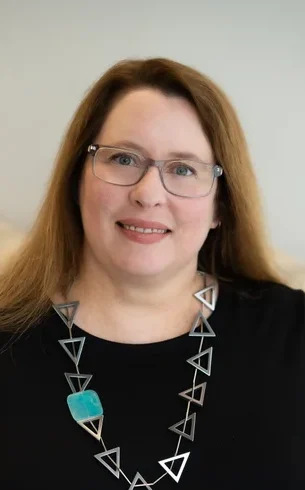
Jenn Walen joined The Community Foundation in March 2020. As the Director, Data and Systems, Jenn leads current efforts to benchmark current information management practices and evolve The Community Foundation’s information systems and processes to higher levels of efficiency and sophistication.
Jenn has over 15 years of experience in development and operations at other community foundations in Baltimore and Nashville and most recently managed foundation relations for a human services organization in Baltimore. She received a BA in Religion from Boston University, Phi Beta Kappa, and did graduate work at Vanderbilt University. Jenn was happy to talk about data governance, unprotected data, and unprotected mission with Carolyn.

Carolyn Woodard is currently head of Marketing and Outreach at Community IT Innovators. She has served many roles at Community IT, from client to project manager to marketing. With over twenty years of experience in the nonprofit world, including as a nonprofit technology project manager and Director of IT at both large and small organizations, Carolyn knows the frustrations and delights of working with technology professionals, accidental techies, executives, and staff to deliver your organization’s mission and keep your IT infrastructure operating. She has a master’s degree in Nonprofit Management from Johns Hopkins University and received her undergraduate degree in English Literature from Williams College.
She was happy to have this podcast conversation with Jenn Walen about data governance questions and the beautiful things that can happen with trustworthy data, and hopes learning about unprotected data, unprotected mission is helpful to our nonprofit audience.
Ready to get strategic about your IT?
Community IT has been serving nonprofits exclusively for twenty years. We offer Managed IT support services for nonprofits that want to outsource all or part of their IT support and hosted services. For a fixed monthly fee, we provide unlimited remote and on-site help desk support, proactive network management, and ongoing IT planning from a dedicated team of experts in nonprofit-focused IT. And our clients benefit from our IT Business Managers team who will work with you to plan your IT investments and technology roadmap if you don’t have an in-house IT Director.
Being 100% employee-owned is important to us and our clients. It is an important aspect of our culture as a business serving nonprofits exclusively for almost 25 years. We constantly research and evaluate new technology to ensure that you get cutting-edge solutions that are tailored to your organization, using standard industry tech tools that don’t lock you into a single vendor or consultant. And we don’t treat any aspect of nonprofit IT as if it is too complicated for you to understand.
We think your IT vendor should be able to explain everything without jargon or lingo. If you can’t understand your IT management strategy to your own satisfaction, keep asking your questions until you find an outsourced IT provider who will partner with you for well-managed IT. You should never have unprotected data or an unprotected mission.
More on our Managed Services here. More resources on Cybersecurity here.
If you’re ready to gain peace of mind about your IT support, let’s talk.
Transcript: Unprotected Data, Unprotected Mission
Carolyn Woodard: I love the title, “Unprotected Data, Unprotected Mission.” Instead of using a term like “governance,” which people often find boring, the way you presented it is great.
Welcome everyone to the Community IT Innovators Technology Topics podcast. I’m Carolyn Woodard, your host. Today, I am happy to welcome a new guest to talk about how unprotected data in your nonprofit leads to an unprotected mission. Jenn, would you like to introduce yourself?
Jenn Walen: Thanks, Carolyn. My name is Jenn Walen. I am the Director of Data and Systems at the Greater Washington Community Foundation in the District of Columbia. This is my third community foundation. I’ve been working in development and databases for about 25 years.
I am here to talk about how important it is to protect our data and how it has to be an organizational priority, not just something that sits in operations or with a database manager. I look forward to the conversation.
Carolyn Woodard: Data is a constant, and I think a lot of nonprofits and foundations have anxiety around it. You had some questions that you like to ask regarding how an organization is using and thinking about data.
Data as an Organizational Priority
Jenn Walen: Right. It is especially true now because cybersecurity and data security are fresh topics that all nonprofits worry about.
It’s important to ask: where does data fit into your organizational priorities? Data is not just financial transactions; it is also the phone calls we have with donors and grantees, and the email interactions we have with advisors or fundholders. All of that data contributes to the overall success of the organization. Determining how you track that and creating a culture around it is really important.
One of the things we do here is everything is tracked as “actions.” An actions report for the week goes out to every staff member every Friday. It’s a great way to get caught up on what’s happening. Sometimes you’ll see an interaction that might affect what you’re doing or where you might have something to contribute.
I think it’s incredibly valuable to share data across departments because you never know who might have information that can contribute to a relationship.
Carolyn Woodard: I love that. Before I was at Community IT, I was an IT Director at a large international nonprofit. At that time, people really protected their contacts and interactions, making it hard to get a full view. People used workarounds because they didn’t trust that the notes were current. They would keep their own little Excel sheets, which just compounds the problem.
Jenn Walen: It does. You need to have a single source of truth.
It’s important to set standards for data entry. For example, creating a checklist when your board of trustees rolls over: who needs to know, who is going to correct it in the database, and who is going to update the records? Relying on Excel sheets means you cannot generate accurate mailing lists or development pipelines. It also makes reporting challenging because you can’t see the full picture if people are holding on to information.
It is about setting standards and getting leadership to reinforce the behavior that data belongs in the one source of truth. It’s not easy, and a lot of people don’t want to change. They like their spreadsheets. But all that data has to be accessible to everyone for it to be useful for the executive director or the board to see progress.
The Path to Clean Data
Carolyn Woodard: I know you went through a process over several years. Where did you start at the Washington Foundation?
Jenn Walen: I started a little over five years ago. I was brought in because a consultant told the foundation that they were ready to switch to a new database, but their data wasn’t clean enough. They created my position as a result. I actually started the first day the office went remote during COVID in 2020.
My charge was to clean up the data and create standards for entry. Sometimes that means taking away permissions so everyone doesn’t have access to everything. I look at every new record created to make sure people are abiding by the standards. You can identify patterns—if a staff member never puts in a prefix, it won’t show up on a mailing list. Catching those behaviors as they happen allows you to correct them along the way.
Carolyn Woodard: You mentioned sharing all actions weekly with everyone. That is such an interesting idea.
Jenn Walen: It is. Sometimes you’re surprised to see someone else is talking to the same person. It helps us stay connected and gives us opportunities to talk to colleagues about what they’re doing. Anytime we can break down those silos between departments, it’s a wonderful thing.
Connecting Data Standards to Cybersecurity
Carolyn Woodard: Can you talk about connecting those data steps with cybersecurity?
Jenn Walen: Every organization handles tech support differently, but in the current climate, we are ever-mindful of threats. We use a tool that provides cybersecurity education videos to our staff, and we conduct security email tests once a quarter to see what we need to work on.
It’s also about minding the confidentiality of the data. Our donor and financial data must stay confidential so that our fundholders trust us. The same goes for any nonprofit. We always say: if you don’t want the donor to read it, don’t put it in the notes. Respecting individual confidentiality and protecting the data in-house is vital. Standards help you do that.
Carolyn Woodard: It’s a little counterintuitive, but having lots of “pockets of truth” makes it harder to know if something has been compromised. An Excel sheet is not the most secure place to keep data.
Jenn Walen: Exactly. Make sure your backups are happening on a regular basis, do the audits, and keep your IT provider honest. A few years ago, we had an incident where we lost three days of data because a backup didn’t happen. It was a very stressful week trying to retrieve and re-enter all of that. You want to make data security an organizational priority so leadership understands how important it is.
Building Data Governance into Business Processes
Carolyn Woodard: How do you weave data governance into the life of a record and communicate that to staff?
Jenn Walen: You have to look at your business processes. Think about gift entry: what fields are required? You need to have documented procedures for all business processes and review them every year or two. If you build standards into the processes, everyone has a guide regardless of staff turnover.
As a data champion, you have to look for opportunities to build in those standards so they become the expectation instead of the exception. Buy-in is important. I’m not going to go to a director as a peer and tell them how to do their job, but if I have one director talk to another to reinforce the behavior, it’s more effective.
Carolyn Woodard: Sometimes a board member can be a champion too, because risk assessment is part of their charge.
Jenn Walen: Yes. When I’ve presented this before, the most common question I get is: “What do I do if leadership is the problem?” If no one is keeping staff accountable or saying this is a priority, nothing will change. It has to be an organization-wide philosophy.
The Rewards of a Single Source of Truth
Carolyn Woodard: What are the beautiful things that happen when the data is finally where it’s supposed to be?
Jenn Walen: You empower your staff to generate accurate lists themselves. From a leadership side, if you have accurate giving and financial data, you can predict future behavior and trends. Boards love that. It also gives staff confidence. If they don’t trust the database, they get frustrated. Having one source of truth makes everyone’s job easier and ensures that every “touch” with a donor is a positive experience.
Carolyn Woodard: Do you have recommendations for people to take away from this?
Jenn Walen: Be consistent. Create standards and uphold them without making exceptions. Also, use a lot of kindness. This is not easy, and there is going to be cleanup that people aren’t happy about. Support your colleagues and be accessible. It’s very satisfying when the database gets into better shape.
AI and the Future of Data Cleanup
Carolyn Woodard: Is there an AI tool that can just fix the data and put it in the right fields?
Jenn Walen: We’ve implemented AI at the foundation in a structured way, starting with education. There are opportunities to use AI to take away the grunt work of data maintenance, but it depends on your database.
I would suggest working with a consultant because AI needs to be used with caution—there are biases and security concerns. You want to make sure the AI isn’t learning from your confidential data.
Carolyn Woodard: I agree. AI might make recommendations, but it doesn’t know what you know about your specific departments or needs.
Jenn Walen: Every output from AI needs a human review. At the foundation, we require that. If you use it to draft an email, it still has to be put into your voice before it goes out. AI can save time, but you have to be careful, especially with confidentiality.
Carolyn Woodard: Great advice. Jenn, thank you so much for sharing your expertise with us today.
Jenn Walen: Thank you, Carolyn. It was my pleasure.
As advocates for using technology transparently to work smarter, we’re practicing what we recommend. This transcript was edited lightly with the assistance of AI for clarity, and is not a verbatim transcript. The content was reviewed, edited, and finalized by a human editor to ensure accuracy and relevance.
Photo by Tijana Drndarski on Unsplash