“IT needs friends and translators”
Listen to Podcast
Like podcasts? Find our full archive here or anywhere you listen to podcasts: search Community IT Innovators Nonprofit Technology Topics on Apple, Spotify, Google, Stitcher, Pandora, and more. Or ask your smart speaker.
Growing IT Management Capacity at Nonprofits with Jean Westrick
Carolyn Woodard talks with Jean Westrick, President and CEO of the Technology Association of Grantmakers (TAG), about why nonprofit technology management should be treated as organizational capacity. Jean argues that digital resilience is becoming as essential as financial resilience.
The conversation moves through why nonprofit IT funding is so hard to secure, what it looks like when funders get this right, and how technology providers and MSPs can be stronger partners.
Jean and Carolyn also preview a white paper they co-authored for TAG and Community IT, Growing IT Management Capacity at Nonprofits, built on the idea that most nonprofit technology struggles are not about the software, they are about capacity – and that growing capacity is an opportunity for funders, nonprofits, and the sector.
Want to learn more? Register for the Community IT September 23 webinar, where Carolyn and Johan Hammerstrom dig deeper into these ideas.
This episode covers:
- Three reasons IT funding is so hard to secure: outdated ideas about overhead, funders treating a technology purchase as the finish line instead of ongoing management, and a failure to recognize that technology decisions are strategic, leadership decisions.
- Naming has power. When the Kauffman Foundation names IT planning, cybersecurity, and AI readiness as eligible capacity building expenses it sends a powerful signal to grantees that they are allowed to ask.
- How the Virtual CTO Program from TechSoup and Tech Impact gives small nonprofits access to technology assessments and long-term roadmaps at an affordable price point and connects them to a cohort of nonprofits on the same IT journey who can share resources and knowledge.
- Why every organization needs IT friends and translators, people who can connect a technology decision back to the mission it is meant to serve.
A first look at Growing IT Management Capacity at Nonprofits, the white paper Carolyn authored, coming from TAG in early 2027.
Resources Mentioned:
- Technology Association of Grantmakers (TAG)
- Virtual CTO Program for the Nonprofit Sector, TechSoup and Tech Impact
- Capacity Building Grants, Ewing Marion Kauffman Foundation
- Register for the Sept 23 webinar with Carolyn and Johan Hammerstrom on Growing IT Management Capacity at Nonprofits
Presenters

Jean Westrick is a strategic, creative leader with two decades of experience in philanthropy, including technology implementation, program strategy and execution, and foundation operations. She leads the Technology Association of Grantmakers, the only organization of its kind providing networking and learning opportunities to advance the effective, equitable and ethical use of technology within the philanthropic sector.
Prior to being named the President and CEO of TAG, Ms. Westrick was the Director of IT Strategy and Communications at The Chicago Community Trust where she led change management efforts for the foundation’s $6M digital transformation initiative. Also, while at the Trust, Ms. Westrick directed On the Table, an award-winning engagement model designed to inspire resident action, replicated in 30 cities nationwide.
A longtime advocate for equity in STEM education, technology access and science literacy, Ms. Westrick holds a Bachelor of Arts from Michigan State University and a Master of Science from DePaul University.
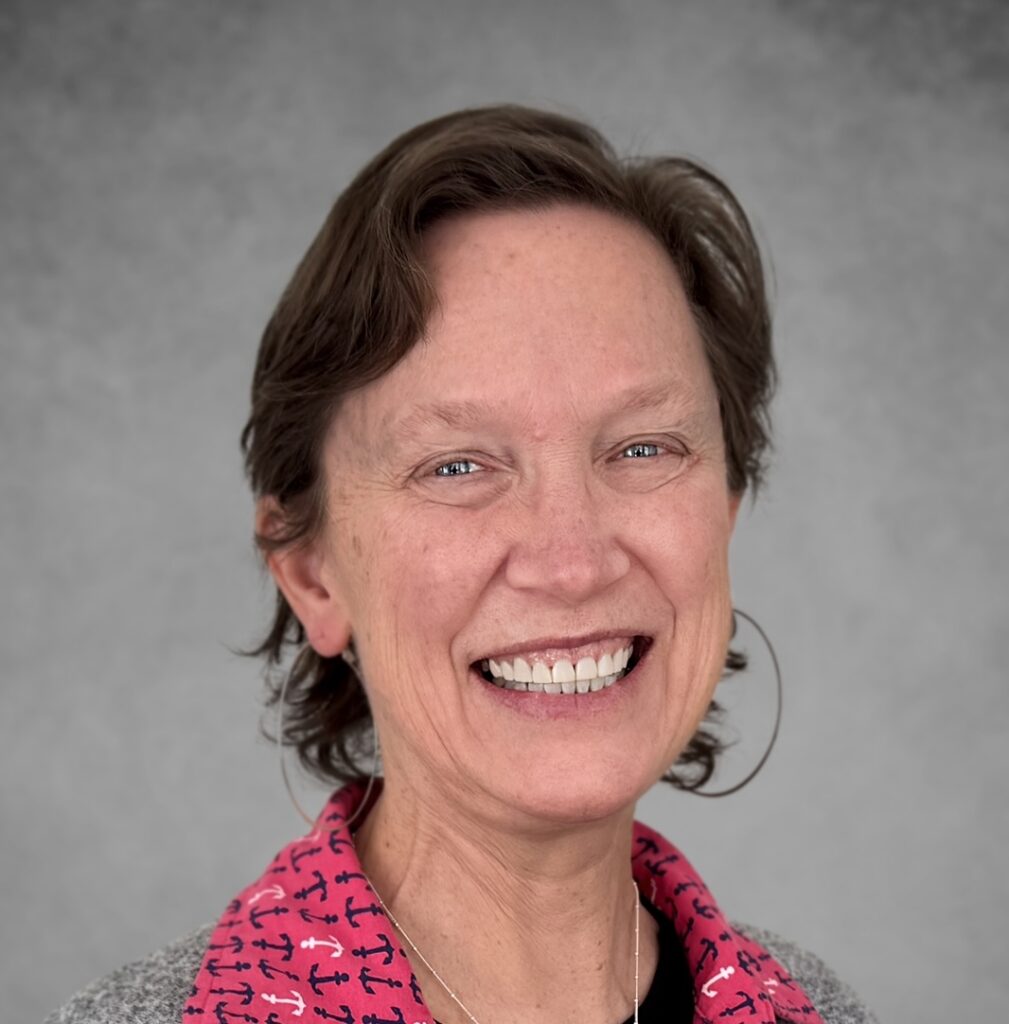
Carolyn Woodard is currently head of Marketing and Outreach at Community IT Innovators. She has served many roles at Community IT, from client to project manager to marketing. With over twenty years of experience in the nonprofit world, including as a nonprofit technology project manager and Director of IT at both large and small organizations, Carolyn knows the frustrations and delights of working with technology professionals, accidental techies, executives, and staff to deliver your organization’s mission and keep your IT infrastructure operating. She has a master’s degree in Nonprofit Management from Johns Hopkins University and received her undergraduate degree in English Literature from Williams College.
She was glad to have this conversation with Jean Westrick about Growing IT Management Capacity at Nonprofits
Ready to get strategic about your IT?
Community IT has been serving nonprofits exclusively for twenty-five years. We offer Managed IT support services for nonprofits that want to outsource all or part of their IT support and hosted services. For a fixed monthly fee, we provide unlimited remote and on-site help desk support, proactive network management, and ongoing IT planning from a dedicated team of experts in nonprofit-focused IT. Our clients benefit from our IT Business Managers team who will work with you to plan your IT investments and technology roadmap if you don’t have an in-house IT Director.
Being 100% employee-owned is important to us and our clients. It is an important aspect of our culture as a business serving nonprofits exclusively for 25 years.
We constantly research and evaluate new technology to ensure that you get cutting-edge solutions that are tailored to your organization, using standard industry tech tools that don’t lock you into a single vendor or consultant. That’s even more important now in the age of AI. And we don’t treat any aspect of nonprofit IT as if it is too complicated for you to understand.
We think your IT vendor should be able to explain everything without jargon or lingo.
If you can’t understand your IT management strategy to your own satisfaction, keep asking your questions until you find an outsourced IT provider who will partner with you for well-managed IT.
More on our Managed Services here. More resources on Cybersecurity here.
If you’re ready to gain peace of mind about your IT support, let’s talk.
Transcript
Carolyn Woodard: Welcome everyone to the Community IT Innovators Technology Topics podcast. I’m Carolyn Woodard, your host, and today I’m really excited to be talking with Jean Westrick, who is the CEO of TAG. Jean, would you like to introduce yourself?
Jean Westrick: Thank you so much, Carolyn, and I’m so pleased to be here. I am Jean Westrick. I’m president and CEO of the Technology Association of Grantmakers. We have over 400 members, mostly grantmakers, and we lead opportunities for those organizations to connect, to learn from one another, and to deepen their commitment to advancing technology so that it serves our philanthropic goals.
So did we talk about when the pandemic happened, the first one in 2020? I had been… I’d been on vacation actually for the two weeks before that. I was in Argentina. So I came back on the Monday, and by Friday, that was Friday the 13th of March. I’ll never forget that date. It’s burned in my brain.
So I’d arrived home earlier that week, and I was asked, I was Director of Strategic Initiatives reporting to the COO, who’s now the CEO, at the Chicago Community Trust, to say, we’re going to send everybody home for two weeks. Will you go and find out if people have the equipment that they need to work from home? So I went around and talked to 100 staff members and asked, do you have a laptop? What do you do exactly?
There were certain things that we could not do from home. One of the things was cut checks. So we had 15,000 paper checks that we printed every year. And because of the security around the printer, the check printer, we couldn’t just move it. So we had to figure out how we were going to reorganize our workflows so that the grants management team could come in on day one and prepare the award letters. Then on day two, you’d have the finance person put together the docket. And day three, you’d have the receptionists come in and get the checks and the letters and put them in envelopes and send them out. So this, and normally we do this twice a week, but we shifted it to once a week in order to accommodate this new structure so that people could work safely.
But it was a real wake-up call that even an organization that at the time had four billion dollars in assets, there were a number of folks who did not have laptops and were not ready to work from home.
And so we recognized that everybody needs technology to do their job, even those jobs that you think are purely administrative. They actually need technology to execute mission.
And this is something that was near and dear to my heart. So then I was charged to develop a business continuity plan as well. And so a lot of this is about the systems that we use in order to really be able to do our work. And our nonprofit partners are no different.
Carolyn Woodard: Oh, they have it even more so, I think, in some cases. When you’re more resource constrained, and you think about a lot of… isn’t it something like 80% or more of nonprofits in the United States are so small? They’re one, two, three-person operations, and they’re very resource constrained.
So their capacity to work without any IT support is really… they do amazing things all the time. But if you’re a funder and you’re not considering that piece of their ability to do their mission, and the strategic thinking around the tech that they’re going to need to do their mission effectively and reach the most people that they want to reach, that’s just a huge blind spot in your funding, I think.
Jean Westrick: 100%. I mean, not to pull on this pandemic example too much, but if you recall in those early days, there were so many people who found themselves at food banks who had never been to a food bank before. Have you seen some of the footage of cars upon cars trying to get to food banks?
Well, most food banks are run with largely volunteer staff. Those volunteer staff are often senior citizens who at the time of the pandemic were most at risk, and they didn’t have technology. Those organizations that were able to do scheduled pickup and touchless pickups, because they had some technology infrastructure that would allow people to do that, were able to continue doing their mission.
Those that didn’t have any technology and relied on a volunteer staff that was then in a compromised position because of a global pandemic were not.
And so this was really getting into this: digital resilience is becoming as essential as financial resilience. And it was a capacity issue and an ability to deliver.
So as I was thinking about this, what we’re aiming to do is really restructure the way we think about this. It’s not administrative infrastructure, it’s mission infrastructure. And shifting that frame and that narrative, I think, is really going to be impactful.
Carolyn Woodard: I hope so. And I hope giving foundations and funders some of these examples and tools… so it’s not just, oh, you should be funding IT management or IT, but how do you do that? So give some ideas and some things that their peers are doing that they might not be aware of.
I’ll share an anecdote as well. One of our clients, the Academy of Hope in DC, they’re an adult charter school, and they work a lot on workforce development and literacy with the DC adult population, people who want to go back to school or get a credential to get a better job.
We had been working with them on a plan for them to be able to support remote learning for their students, because they have a lot of working parents. It would be easier for them to have a laptop at home to be able to log into a Zoom class instead of having to physically go to the campus. So we already had that plan together.
And the summer of 2020, they went to their funder and said, what are we going to do in the fall? We’ve got this plan. And the funder said, if you can do it, we’ll fund it.
So they had three months to get support for all of their students to be remote, and they opened in September with all of their students being able to have a laptop and work from home. It was very stressful for all of the staff.
But because they already had that roadmap and that plan, the funder was willing to work with them. And I think if they had come in and said, we want to be able to do this, we’re going to start talking to some technology friends who can help us out with this, their funder would have been really skeptical. But having that strategic thinking already in place, the funder was just like, let’s do it.
Jean Westrick: I think that you’re absolutely right, that this IT management is organizational capacity. And we need to really redefine how we think about organizational capacity. It is that ability to make long-term plans, to be able to prioritize, and to be able to think about creating resilience where you are and being able to deliver your mission in unique ways, despite some of the challenges.
Why It’s Hard for Nonprofits to Get IT Funding
Carolyn Woodard: Can I ask you why it can be so hard for nonprofits to get funding that supports their IT needs, including IT management? We’ve just talked about several examples where it seems like a no-brainer. So what are the barriers?
Jean Westrick: I think it comes down to three things.
Number one, I think we’ve inherited this old, outdated idea of overhead. For decades, the nonprofit sector has been encouraged to spend as little money as possible on administration and infrastructure. And technology was often viewed as an expense that needed to be minimized rather than an investment that really enables mission.
And so, while philanthropy has made tremendous progress in moving beyond this overhead myth and leaning into trust-based philanthropy and those types of strategies, many funding practices still reflect those old assumptions.
The reality is that nonprofits today… every single organization is a technology organization, whether or not we admit that. Because whether you’re providing housing or healthcare, environmental advocacy, disaster relief, your mission really depends upon secure systems, quality data, reliable communications, and a digital infrastructure to deliver those services. So I think that’s the first piece.
Number two, funders often see purchasing technology as the end goal, rather than managing IT as a capacity. Buying licenses to Microsoft 365 or getting a new CRM is the easy part. What is much harder, and more valuable, I would say, is someone who knows how those systems fit together, how to manage cybersecurity, how to govern data, how to prioritize investments, because you’re not going to be able to do everything all at once. So you need to be able to build those roadmaps, and you need to be able to make decisions that are going to actually advance the mission.
And so you have to have a good organizational strategy, and your IT strategy needs to match that. That’s IT management.
Organizations are not failing because they bought the wrong software. They’re struggling because they lack the internal capacity to manage technology strategically. Those are two different things. Buying the tools is the easy part; managing it is the harder piece.
Number three, technology, whether or not we like it or recognize it, is not simply an IT issue: it’s a leadership issue.
So we’re asking nonprofits to adopt AI responsibly, to protect sensitive constituent data, to defend against cybersecurity attacks, to comply with privacy regulations, to support remote work, to integrate all these increasingly complex systems and platforms. And the platforms have proliferated tremendously in the last few years, where we’re going in and out of a lot more systems than we ever were before.
These are not isolated technology projects. These are governance questions; they’re risk management questions; they’re organizational leadership challenges. And so we expect nonprofits to be able to navigate all of this without investing in the people and planning needed to do that well.
So we really need to evolve the question beyond, how do we buy nonprofits more tech? How do we make sure everybody has a laptop? And really think: how do we build organizations that know how to steward technology well?
That’s going to create the resilience, that’s going to create the ability to be opportunistic when times happen, or when there are new challenges to delivering that mission, and you’re going to need to come up with a technology solution in order to keep being able to serve your mission.
So it’s really not about buying the tools, it’s about how to steward these tools. And that is something that is much harder to do.
Funders and Partners Leading the Way
Carolyn Woodard: Do you have any examples of funders or foundations now that are thinking about this and taking this approach to help their nonprofit grantees be better stewards of IT?
Jean Westrick: Absolutely. I think there are probably more out there than what I’m going to name now.
One example that really comes to mind is the Kauffman Foundation out of Kansas City. And I’m going to say this one because the innovation is actually remarkably simple; it’s not an innovation at all. What is happening is that Kauffman is explicitly naming IT planning and cybersecurity as eligible expenses in their capacity-building grants. They’ve named it.
When foundations don’t mention technology, nonprofits can assume that they shouldn’t ask for it. So by naming that they support technology planning and cybersecurity and implementation of your CRM or AI readiness as legitimate capacity-building investments, that shifts the narrative. That changes the conversation.
What Kauffman is doing is sending a signal that says technology isn’t overhead, it’s organizational capacity. And that powerful shift is really important, so that nonprofits know that they can ask for it. That’s really important.
I also appreciate that the Kauffman model does not separate technology from leadership. We don’t think about it as a back-office thing. It is really about building capacity, and it’s a leadership question as opposed to an overhead question. So when they fund strategic planning and leadership development, they are also funding data capacity. They’re also funding technology and how it can enable their mission. And those things now can reinforce each other.
Carolyn Woodard: We talk a lot at Community IT about the knowledge that is in the nonprofit. The people who work at the nonprofit know better than anyone what they do and how they do it and how they could do it. So I love the Kauffman example that you gave, because it helps to unlock that knowledge and feed it into the technology support that they need to be able to do the things that they want to do.
Jean Westrick: Sometimes you just have to name the things. And language is really powerful. So when we think about technology as overhead, we’re going to treat it as overhead. When we think about it as a mission enabler, we’re going to think about it differently.
I’m grateful for those examples that are just recognizing the true potential that organizations who invest in technology are more effective. And so we want to make sure that we’re funding organizations so they can be more effective. And that includes technology.
Carolyn Woodard: Yeah, that technology can really unlock a lot of effectiveness.
What about tech companies and IT services vendors? I think there are a lot of tech companies that have nonprofit donation programs, like Microsoft has a discounted license. I know Google has discounted licenses also. And I kind of feel like that’s…
I don’t want to say it’s the least they can do, because it is a huge benefit to those nonprofits, but it’s kind of the first layer of what you can do. Do you have any examples of a tech company that’s going a little bit deeper than that?
Jean Westrick: Yeah, and this isn’t so much a for-profit, but they do serve the nonprofit space: TechSoup and Tech Impact have come together and partnered to create a virtual chief technology officer program, a virtual CTO.
What’s particularly interesting is not just the service, but the model by which they’re doing this. For many small nonprofits, and most nonprofits are small, we’re talking about 90% or more have budgets under a million dollars, they don’t have the resources to hire an experienced chief technology officer, or even an IT director is simply not financially viable for them.
So instead of asking nonprofits to build that expertise internally, what TechSoup and Tech Impact have done is really create this fractional executive model, buying that incredible expertise and experience that allows them to do more.
Organizations as part of this program receive a technology assessment to really understand what their IT maturity looks like right now. How does this line up with strategic planning? What kind of guidance can we give that organization around cybersecurity and managing those complex risks? What sort of advice can we give them about budgeting, and making sure that there are ways in which we can scaffold the budgets in order to meet the needs, and provide that ongoing expert consultation about how you can get more out of your technology, and then build that technology roadmap so that you can add capacity over time and be able to scaffold the various activities in a way that is going to meet your mission now and grow with you over time.
I think that is fundamentally different than traditional technology support, like hiring an MSP. A managed service provider is great for your help desk and provisioning your laptops and being able to manage your patching and your security needs, that sort of ongoing maintenance stuff that is really critical, but it doesn’t provide you that long view of the planning that you really need in order to manage IT effectively. So TechSoup and Tech Impact are helping organizations make better decisions for the long haul, not just fixing the computers that are broken today, or whatever the IT challenges of the moment are that would go to an MSP who can help with those types of things.
But it’s really about moving that maturity along. We haven’t talked about our white paper, but this is one of the ideas that comes into that: this idea that maturity comes from management. So yes, you do need to be able to service and do maintenance and those types of things, but technology planning, governance, prioritization, figuring out what your security program is, managing your vendors, those are all capabilities that are much more than just buying a tool. They’re really about developing the capacity to lead this work effectively.
And so a virtual CTO model really gives those smaller nonprofits access to expertise at a price point they could never achieve individually.
I think also, and I don’t know if this is the case with this particular model, is just that when you think about these models, it’s more than helping the individual, it’s about helping the cohort. There are lessons that can be applied across the whole program. These small nonprofits share in their need for more IT capacity, but they’re probably, I would assume, able to share some lessons across, which will let them scale that impact even further. So I love this idea of building an ecosystem of digitally resilient nonprofits, and then being able to scale those innovations across that network. That’s really powerful.
Carolyn Woodard: And I love that price point too, like you were saying, because if you wanted to try and hire a consultant, even just to do an assessment, it’s going to be $50,000, $70,000. So this virtual CTO program is much more affordable than that, and it starts with that assessment. So you get that as part of being part of the cohort. And like we were talking about earlier, this is something that your funder or your donors could fund you to take, to be part of this cohort with the virtual CTO. So it’s building on an expertise that your funder might not have, but pointing you toward something that is going to give you a lot of benefit.
Jean Westrick: I couldn’t agree more.
Carolyn Woodard: I want to jump in and just make sure to mention that Community IT is an MSP, but in addition to our help desk, we have the IT Business Manager role. Because we only work with nonprofits, we get a lot of clients that come to us who have worked with an MSP that just didn’t really understand nonprofits and the resource constraints and the thinking and the leadership that goes into it, or maybe found it difficult or challenging. So our IT Business Managers do that role of trying to look beyond the help desk, figuring out budgeting and strategic planning and all of that for our clients. There are MSPs out there that do that, but not most of them.
Jean Westrick: I think you hit on a very important part, that your partner, your MSP, becomes an extension of your team in a lot of respects. So you want to make sure that’s a good fit for your needs and what you’re trying to do. There isn’t a one-size-fits-all. You want someone who’s invested in your success, because they are going to be a critical part of your team. So I’m glad that Community IT offers both the MSP as well as some of that strategic planning.
Carolyn Woodard: Yeah, we really look at ourselves… over the 25 years of working with nonprofits, we’ve really realized that we need to partner with the clients. So that is looking for a long-term partnership, so we can really understand what they’re trying to do and figure out the IT that can get them there.
So do you want to talk a little bit more about TAG and about the white paper that we have coming out?
A New White Paper: Growing IT Management Capacity at Nonprofits
Jean Westrick: Yes, I’d love to. So for your listeners who don’t know who TAG is, TAG is the Technology Association of Grantmakers. We’re a membership association that serves the philanthropic community. Our members are grantmakers. And we’re super excited to be releasing a white paper with Community IT.
The paper that we have drafted together is called Growing IT Management Capacity at Nonprofits. So again, you’re hearing that IT management, and that reframe that this is more than just laptops. This is about managing your technology environment.
And I think that white paper makes a really strong case that nonprofit technology challenges are not about the software or the hardware or the tools. They’re about that organizational capacity.
So that paper will explore why IT management matters, what maturity at a nonprofit, what IT maturity, looks like, what are the practical actions nonprofits can take, what can funders do differently, and how technology providers can be stronger partners in building that resilience.
I think the white paper will appeal whether you’re a nonprofit executive, your technology leader, your grantmaker who is looking to deepen your support and build capacity amongst your grantees, or your technology partner. I think what folks will leave with is really practical ideas for strengthening digital capacity amongst the organizations that are doing such important work in our communities.
I feel super strongly about this, and I think we just need to continue to shape this narrative, because through this process, it’s giving me new ways to talk about this.
Carolyn Woodard: I love it. I love it.
Jean Westrick: Does that make sense?
Carolyn Woodard: Yeah. And I feel like this is… when I was writing the paper, I was like, I really want to start from a positive place. What are the assets that we all have that we bring to this conversation, and this conundrum, before talking about what’s challenging, what are the barriers, and all of that.
And I feel like that empowerment… because I run into it over and over, when I’m talking to people at conferences, to funders, where it’s just like there’s a fear, like, oh, I’m not the IT person, so I don’t know enough that I can write that into the grant or talk to my grantees about it. It’s just something that makes people nervous. You wouldn’t say, well, I can’t help you with your budget because I’m not a CPA. You’d just say, I’ll help you with your budget, whatever.
Jean Westrick: I think reshifting this to, it’s organizational capacity, not software. I’ve managed a lot of big technology projects, and I consider myself an accidental techie. I don’t program. I’m not a data architect. That’s not my work. My work is connecting the technology to the business need. What is the business need?
Carolyn Woodard: Finding the people to do the tech, like anything. You’re like, I need that done. Who do I know, or who do I hire that does it?
Jean Westrick: So if you’re sitting with me long enough, you’ll hear me say, IT needs friends and translators.
And I feel strongly about that. It’s that organizations treat IT as a back-office thing, and those staff don’t feel empowered that they should have a seat at the strategy table.
And technology, when it’s wielded strategically, is powerful. It unlocks a lot of impact that couldn’t be possible without it. So we want to make sure that we’re building bridges across organizations, so that whatever technology knowledge you have internally is being tapped effectively.
But then being able to translate it into the business need and articulate it in terms of what your mission is: that’s not a conversation about which CRM we should buy. I don’t have a horse in that game, but what I do have a vested interest in is making sure that organizations are able to serve their mission.
And as we talked about at the top of this hour, this mission is living in a time where change is happening faster and faster. Organizations are going to need to develop a certain amount of resiliency in order to navigate some of this change that is happening. Things that you didn’t plan for, whether it’s a global pandemic or a natural disaster, those are the types of things we need to be prepared for.
Having an ability to connect how technology may be able to add that resiliency and add that capability that didn’t exist, so that you can continue to serve the vulnerable people that you do every day with your mission, without having to be bogged down by outdated systems or ineffective technology tools.
Carolyn Woodard: And I think in addition to that, we work in communities with constituents that expect technology to work, and they expect to be able to do things with us as a nonprofit, a food bank, an education nonprofit, or advocacy nonprofit, that utilizes technology that they’re comfortable with.
And if you can’t, or don’t, or are doing something on paper still…
Jean Westrick: The speed by which we’re able to serve our community matters. Technology can certainly make things more efficient in that way. But also, I think we want to have tools that are meeting people where they’re at.
I’m a big proponent of talking about human-centered design and those tools with community. Because if that’s how you’re delivering your mission, you want to make sure that you’re actually solving the real problems that you’re trying to solve for. So designing tools with community, instead of at community or for community, makes a lot more sense in the long term, because it’s an extension of how you deliver a mission.
Carolyn Woodard: Yeah, for sure. Jean, I want to thank you so much for your time today. I loved this conversation. It’s something I’m passionate about and you’re passionate about. So thank you so much for coming to talk to us about it today.
Jean Westrick: Thank you so much. I really appreciated this conversation too.
Technology is a tool. It does not create impact on its own. It’s up to us, the humans who are managing that tool. It’s the people, it’s the governance, it’s that thoughtful stewardship that really matters. So if we want stronger nonprofits, we not only need to invest in the tools that they use, but their ability to use them effectively. So I’m excited about this conversation, excited about this white paper, and continuing to help lift this up as an important issue.
As advocates for using technology to work smarter, we’re practicing what we recommend. This transcript was drafted with the assistance of AI, and is not a verbatim transcript. The content was edited for clarity, and was reviewed, edited, and finalized by a human editor to ensure accuracy and relevance.
Photo by Luca Bravo on Unsplash